

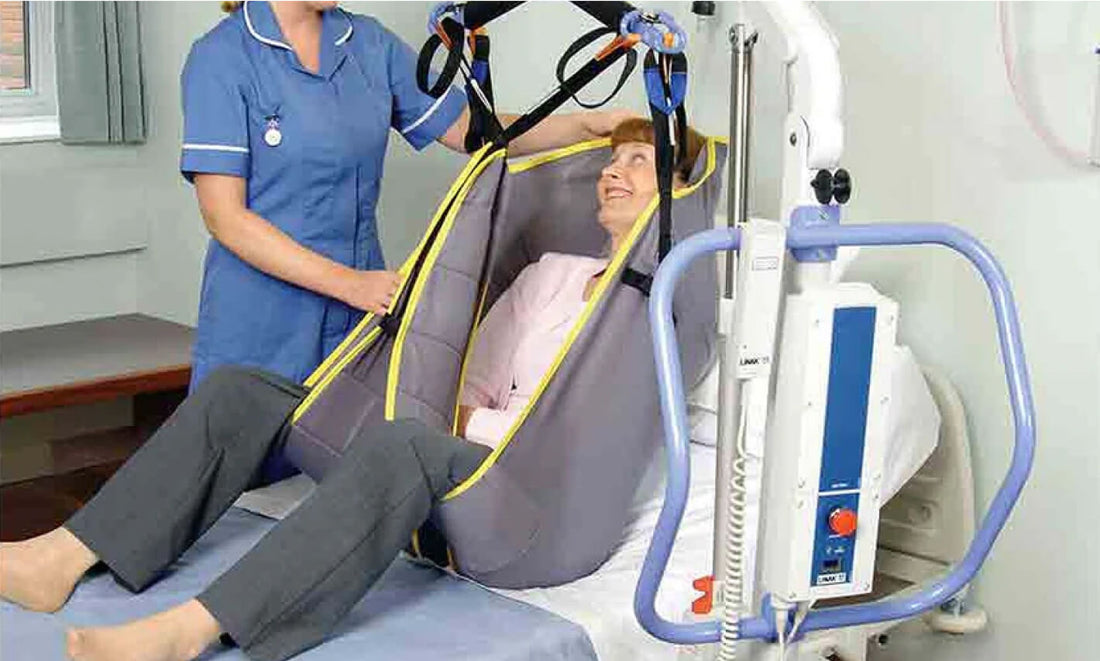
When caring for someone with limited mobility, choosing the right patient lift can make a meaningful difference in both safety and daily routine. Many caregivers find themselves comparing options and asking whether a manual or powered system is the better fit. This patient lift comparison guide is designed to help you understand the key differences between these two common options so you can make a more confident, informed decision.
At the most basic level, the comparison of the hydraulic Hoyer lift vs. electric lift comes down to how each device is powered. A hydraulic lift uses a manual pumping system, while an electric model relies on a motor and battery. Both are designed to support safe transfers, but the experience of using them can feel very different.
A Hoyer lift is a widely recognized type of transfer equipment used to move individuals between surfaces such as a bed, chair, or commode. Whether manual or powered, these lifts are built to improve safety during transfers while supporting the needs of both the individual and the caregiver.
Understanding electric vs. manual patient lift options is not about choosing a universally “better” solution. Instead, it’s about finding the right balance between budget, caregiver ability, frequency of use, and comfort needs. For a deeper overview of the basics of Hoyer lifts, it can help to explore how these systems function before comparing specific types.
How Hydraulic and Electric Patient Lifts Work in Everyday Use
To understand the differences between a manual vs. electric Hoyer lift, it’s helpful to look at how each one functions during a typical transfer.
How a Hydraulic (Manual) Hoyer Lift Works
A hydraulic lift, often referred to as a manual Hoyer lift, operates using a hand pump. The caregiver positions the lift, secures the sling, and manually pumps a handle to raise the individual. Lowering the person involves slowly releasing hydraulic pressure. This process creates a controlled lift, but it requires repeated physical effort.
Because the lift rises incrementally with each pump, the movement may feel more step-by-step rather than continuous. Caregivers often pause between pumps to check positioning and comfort, which can make the transfer feel more hands-on.
How an Electric Hoyer Lift Works
In contrast, an electric Hoyer lift uses a motor to perform the lifting motion. Once the sling is secured and the lift is in position, the caregiver uses a handheld control to raise or lower the individual. The motion tends to feel smoother and more continuous compared to manual pumping.
With powered systems, the lift moves at a consistent pace, allowing caregivers to focus more on positioning and support rather than generating lifting force.
What Daily Use Feels Like for Caregivers
Another key difference is how each system feels during repeated use. With manual lifts, each transfer requires the same level of effort, regardless of how many times it’s performed in a day. Over time, this repetition can become physically demanding, especially when assisting with transfers involving equipment like a manual wheelchair.
Electric lifts provide a more consistent experience from one transfer to the next. The reduction in physical effort can make it easier to maintain proper technique throughout the day, supporting both safety and efficiency.
Why This Difference Matters Over Time
From a daily-use perspective, the difference becomes more noticeable over time. With manual lifts, each transfer involves physical effort, which can add up quickly in busy care routines. An electric lift simplifies the process by reducing the need for repetitive motion.
For caregivers managing frequent transfers, this distinction plays a major role in long-term usability. The physical demands of a manual system may be manageable for occasional use, but powered options often provide a more sustainable solution for ongoing care.
Pros and Cons of a Hydraulic Hoyer Lift
A hydraulic system offers several advantages, particularly for those seeking a simpler, more budget-friendly option. Many families exploring a patient lift buying guide are initially drawn to manual models because of their lower upfront cost.
Pros of a Hydraulic Hoyer Lift
One of the primary manual patient lift benefits is reliability. Because hydraulic lifts do not rely on batteries or electrical components, they can be used without worrying about charging or power availability. This makes them a dependable option in a wide range of environments.
Another advantage is simplicity. With fewer electronic components, manual Hoyer lifts are often easier to maintain and may require less ongoing upkeep. For caregivers who prefer straightforward equipment without added features, this can be a strong selling point.
Hydraulic lifts are also typically lighter or easier to transport than some powered models, depending on the design. This can make them a practical option for households where the lift needs to be moved between rooms or stored when not in use.
Cons of a Hydraulic Hoyer Lift
However, there are trade-offs. The repeated pumping required during transfers can increase physical demand. Over time, this may lead to fatigue, especially in situations where transfers happen multiple times per day. This is where caregiver strain reduction becomes an important consideration.
In terms of comfort, hydraulic lifts may feel slightly less smooth because the lifting motion occurs in increments rather than a continuous movement. While this does not affect safety, it can impact the overall experience for individuals who are sensitive to movement or prefer a more controlled lift.
Manual operation can also slow down transfers, particularly when compared to powered alternatives. For caregivers managing tight schedules or multiple transfers throughout the day, this added time and effort can become noticeable.
So, when should you use a manual patient lift? These systems are often a good fit for occasional transfers, short-term recovery situations, or households where budget constraints are a primary concern. They may also work well in environments where portability and simplicity are priorities.
Pros and Cons of an Electric Patient Lift
Powered systems offer a different set of advantages, particularly for long-term or high-frequency care situations. The most notable of the electric patient lift benefits is the reduction in physical effort required during transfers.
Pros of an Electric Patient Lift
An electric patient lift eliminates the need for manual pumping, which can significantly reduce strain on the caregiver. This is especially important in households where the caregiver may already be managing physical limitations or multiple responsibilities.
Another major advantage is consistency. Because the lift operates using a motor, the movement tends to be smoother and more controlled. This can help create a more comfortable and predictable experience, particularly for individuals who may feel anxious during transfers.
Electric lifts also support more efficient daily routines. With less physical effort required, caregivers can focus more on positioning and communication rather than the mechanics of lifting. This can improve both safety and confidence over time.
For households managing ongoing care needs, this level of ease and reliability can make a noticeable difference in day-to-day caregiving.
Cons of an Electric Patient Lift
Of course, there are considerations to keep in mind. Electric models typically come with a higher initial cost, which may not fit every budget. They also require regular charging and some level of power management. Forgetting to charge the battery or not monitoring usage can interrupt availability when the lift is needed. In some cases, electric lifts may be heavier or slightly bulkier than manual options. While this varies by model, it can impact maneuverability in smaller spaces or homes with limited storage.
Many caregivers find themselves asking, “Is an electric Hoyer lift worth it?” For those managing frequent transfers or long-term care, the added convenience and reduced physical demand often make it a worthwhile investment.
For those exploring options, Shop Orthopedics offers a range of electric patient lifts designed to support different care needs and environments. Our team is available to help you compare features and find the right fit for your specific caregiving situation.
How to Decide Which Lift Is Right for Your Home and Care Routine
Choosing between a manual and powered lift involves more than just comparing features. The decision often depends on how the lift will be used in everyday life.
Caregiver ability is one of the most important factors. A system that looks manageable on paper may feel very different after repeated use. For caregivers who may struggle with physical effort, an electric option may provide a more practical solution.
Patient needs also play a central role. Factors such as mobility level, comfort preferences, and frequency of transfers all influence the best choice. Individuals who require full support or frequent repositioning may benefit from the consistency of a powered system.
Home layout is another consideration. Space constraints, flooring type, and storage needs can all affect how easily the lift can be used and moved between rooms. In smaller spaces, maneuverability may be just as important as lifting capability.
When selecting the best patient lift for your transfer needs, it’s helpful to think beyond the product itself and consider how it fits into daily routines. A lift that aligns with both caregiver ability and patient comfort will always provide better long-term value.
Safety, Sling Compatibility, and Ease of Use Considerations
No matter which type of lift you choose, safety remains the most important priority. A lift is only as effective as its setup and proper use.
Sling compatibility is a key factor that is sometimes overlooked. Different lifts are designed to work with specific sling types, and choosing the right combination ensures proper support during transfers. This is especially important for individuals who require additional support for the head or torso.
Ease of use also plays a major role in safety. The easier a lift is to operate, the more consistently it can be used correctly. This is where a patient lift ease of use comparison becomes valuable, as it highlights differences in operation between manual and powered systems.
Training and familiarity are equally important. Even the most advanced lift requires proper handling to ensure safe transfers. Caregivers should take the time to understand how the system works and follow manufacturer guidelines for setup and operation.
Ultimately, the safest option is the one that caregivers feel confident using on a daily basis.
Choosing Between a Hydraulic Hoyer Lift and Electric Lift for Long-Term Confidence
When comparing options, it’s helpful to think about long-term use rather than just initial cost. A patient lift cost comparison may show that manual lifts are more affordable upfront, but the ongoing physical demands can make them less practical over time, especially in care routines that involve multiple daily transfers.
From our experience working with caregivers, the right choice often comes down to sustainability. For households managing regular transfers, the reduced effort and smoother operation of an electric model can provide lasting benefits. Over time, minimizing physical strain can make a meaningful difference in consistency, safety, and overall caregiver well-being. For occasional use, however, a hydraulic system may still be a practical and reliable solution.
The key is to match the lift to your specific care routine. Consider how often transfers will occur, who will be operating the lift, and what level of support the individual requires. Factors like available space, ease of maneuverability, and comfort during transfers should also be part of the decision-making process.
At Shop Orthopedics, we work closely with families and care teams to help them navigate these decisions with confidence. For those looking for the best Hoyer lift for home use, we offer a curated selection of hydraulic patient lifts and powered systems designed to meet a wide range of needs. You can also explore our full collection of patient lifts to compare features, weight capacity, and ease of use across different models.
If you’re unsure which option is the right fit, our team is always available to help you evaluate your setup and choose a solution that aligns with your care goals.
In the end, the best patient lift for caregivers at home is the one that supports safe, comfortable transfers while making daily caregiving more manageable for you and the person in your care.


