

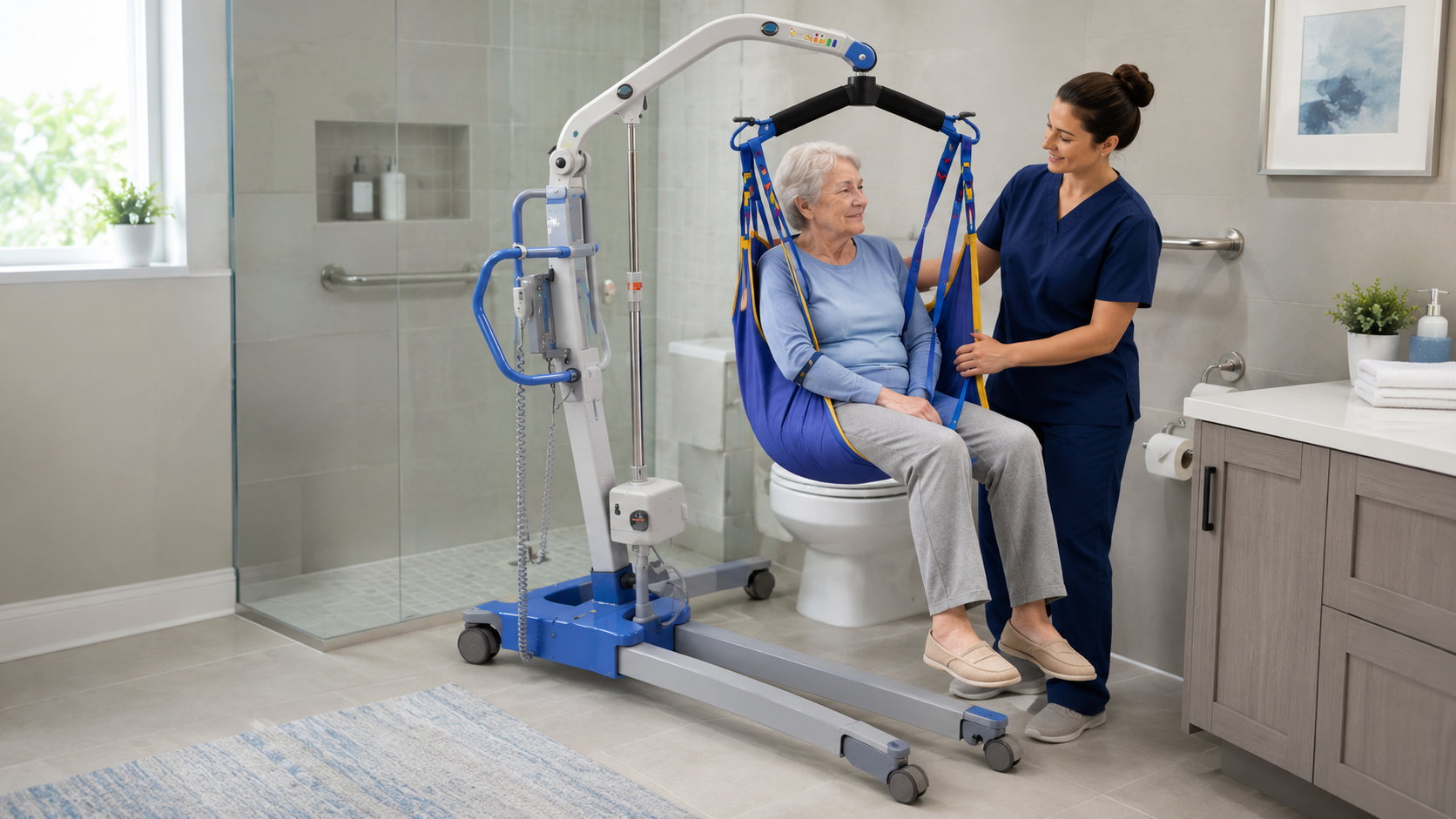
For many caregivers, bathroom transfers are the most challenging part of the day. Unlike moving from a bed to a chair, bathrooms are often smaller, have limited space to maneuver, and include hard surfaces that increase the risk of injury if a fall occurs.
The right Hoyer lift can make these everyday transfers safer and more comfortable while helping caregivers feel more confident. Choosing the right lift isn't just about mobility—it's about making one of the most personal parts of daily care easier for everyone involved.
Why Bathroom Transfers Are Different
Bathrooms present challenges that other rooms in the home don't.
Limited floor space, narrow doorways, and fixtures such as toilets and vanities can make positioning a patient lift more difficult. At the same time, your loved one may feel less stable when standing, especially if they have weakness, balance issues, or fatigue.
Without the proper equipment, caregivers often find themselves lifting, twisting, or reaching in awkward positions—all of which increase the risk of injury.
Which Type of Lift Works Best?
The best lift depends on your loved one's mobility.
If they can still stand with assistance, a sit-to-stand lift is often the most practical option for bathroom transfers. It allows the user to participate in the movement while providing the support needed to stand safely.
For individuals who can no longer bear weight, a full-body patient lift offers complete support throughout the transfer, helping reduce physical effort for the caregiver.
Understanding your loved one's mobility level is the first step toward choosing the right solution.
Why the Hoyer Journey Is a Great Choice
For individuals who still have some standing ability, the Hoyer Journey Sit-to-Stand Lift is an excellent option.
Its compact frame is designed for home environments where space is limited, making it easier to position around toilets and bathroom fixtures. Because the Journey encourages users to participate during transfers, it can also help maintain confidence and independence for those who still have partial weight-bearing ability.
Many caregivers appreciate how quickly it can assist with routine bathroom transfers while reducing the amount of lifting required.
When the Advance-E Makes More Sense
If your loved one requires complete assistance, the Hoyer Advance-E is often the better choice.
Its lightweight, foldable design makes it easier to move between rooms, while the swan-neck leg design allows the lift to get closer to toilets, commodes, and other furniture. This makes positioning easier in smaller bathrooms where maneuverability is important.
For caregivers managing full-body transfers several times a day, these design features can make a noticeable difference.
MyHoyerLift Recommendation
One of the biggest mistakes families make is choosing a lift based only on weight capacity. For bathroom transfers, maneuverability is just as important. A lift that easily fits into your bathroom layout will make daily care much smoother.
Small Changes That Improve Bathroom Safety
Along with using the right patient lift, a few simple adjustments can make transfers even safer.
Consider:
- Keeping the floor dry before every transfer.
- Removing rugs or obstacles near the toilet.
- Ensuring there's enough space to position the lift comfortably.
- Keeping frequently used items within easy reach.
- Moving slowly and communicating throughout the transfer.
These small changes help create a safer environment for both the caregiver and the person receiving care.
Caregiver Tip
If you're remodeling or reorganizing a bathroom for long-term care, measure the available space before choosing a patient lift. A compact lift that fits your home will be easier to use every day than a larger model designed primarily for institutional settings.


