

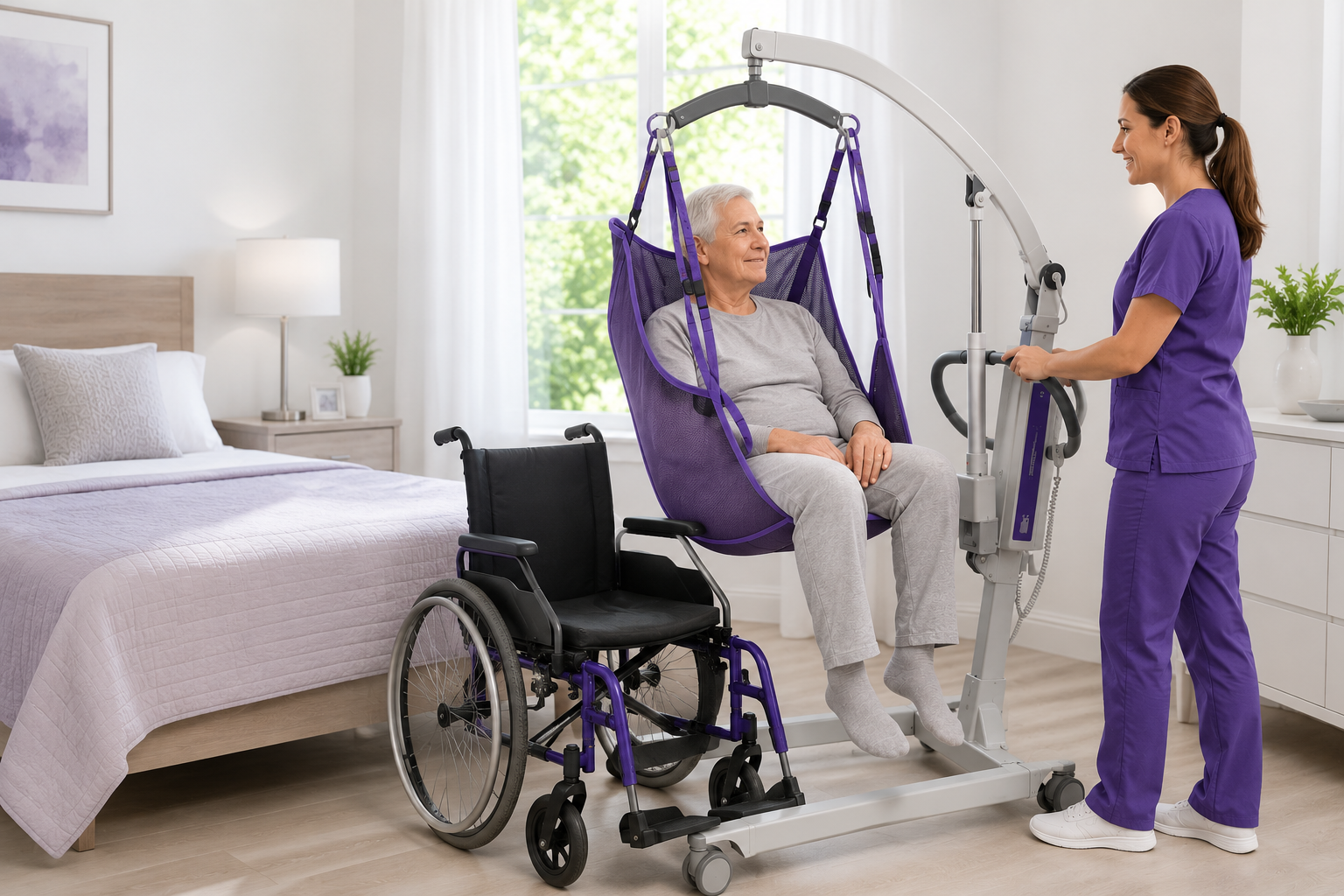
Buying a Hoyer lift is often a big step for families. While it brings peace of mind, many caregivers admit they feel nervous before using it for the first time. Questions like "Will I use it correctly?" or "Will my loved one feel safe?" are completely normal.
The good news is that modern patient lifts are designed to make transfers safer, smoother, and much easier than manual lifting. Once you become familiar with the process, many caregivers wonder how they ever managed without one.
It's Normal to Feel Uncertain
Using a patient lift is different from helping someone stand by hand. During the first few transfers, it's natural to move more slowly and double-check everything.
Your loved one may also feel unsure at first, especially if they've never used a lift before. Taking a few extra moments to explain each step and reassure them can help create a calm, comfortable experience.
Remember, confidence comes with practice—for both the caregiver and the person being transferred.
Preparing for Your First Transfer
A successful transfer starts before the lift begins to move.
Before using your Hoyer lift:
- Make sure there's enough space around the bed or chair.
- Lock the wheelchair or recliner if needed.
- Remove any rugs or obstacles from the transfer path.
- Check that the lift is fully charged if you're using an electric model.
- Explain the process to your loved one so they know what to expect.
A little preparation helps every transfer feel safer and more controlled.
Why the Hoyer HPL450 Is Easy for First-Time Caregivers
If you're new to patient lifts, choosing a model that's simple to operate can make a big difference.
The Hoyer HPL450 is designed for everyday use in both home and professional care settings. Despite its compact footprint, it offers a generous lifting range and a 450 lb. safe working load, making it suitable for a wide variety of users.
One feature many caregivers appreciate is its oversized ergonomic push handle, which provides better control when moving the lift around the home. The six-point cradle also helps create smooth, stable transfers, giving both caregivers and patients added confidence.
For families learning to use a patient lift for the first time, these practical design features can help make the transition much easier.
What Your Loved One Will Experience
Many caregivers worry that using a patient lift will feel uncomfortable or frightening.
In reality, most users quickly become accustomed to the gentle, controlled movement of an electric lift. Instead of being manually lifted or supported under the arms, they experience a smooth transfer that often feels more secure and dignified.
Talking throughout the transfer and moving at a comfortable pace can help build trust and reduce anxiety.
The First Few Days Make All the Difference
Like any new routine, using a patient lift becomes easier with repetition.
Within a few days, many caregivers notice that transfers become:
- Faster and more organized
- Less physically demanding
- More comfortable for their loved one
- Less stressful overall
Rather than focusing on the mechanics of the lift, caregivers can spend more time focusing on the person they're caring for.
MyHoyerLift Recommendation
If this is your first patient lift, don't choose a model based only on lifting capacity. Look for one that's easy to maneuver, simple to operate, and comfortable to use every day. The Hoyer HPL450 is an excellent choice for caregivers who want a reliable, user-friendly lift that inspires confidence from day one.
Caregiver Tip
Practice moving the lift around an empty room before your first transfer. Becoming familiar with steering, positioning, and operating the controls without time pressure will make your first real transfer feel much more comfortable.


