

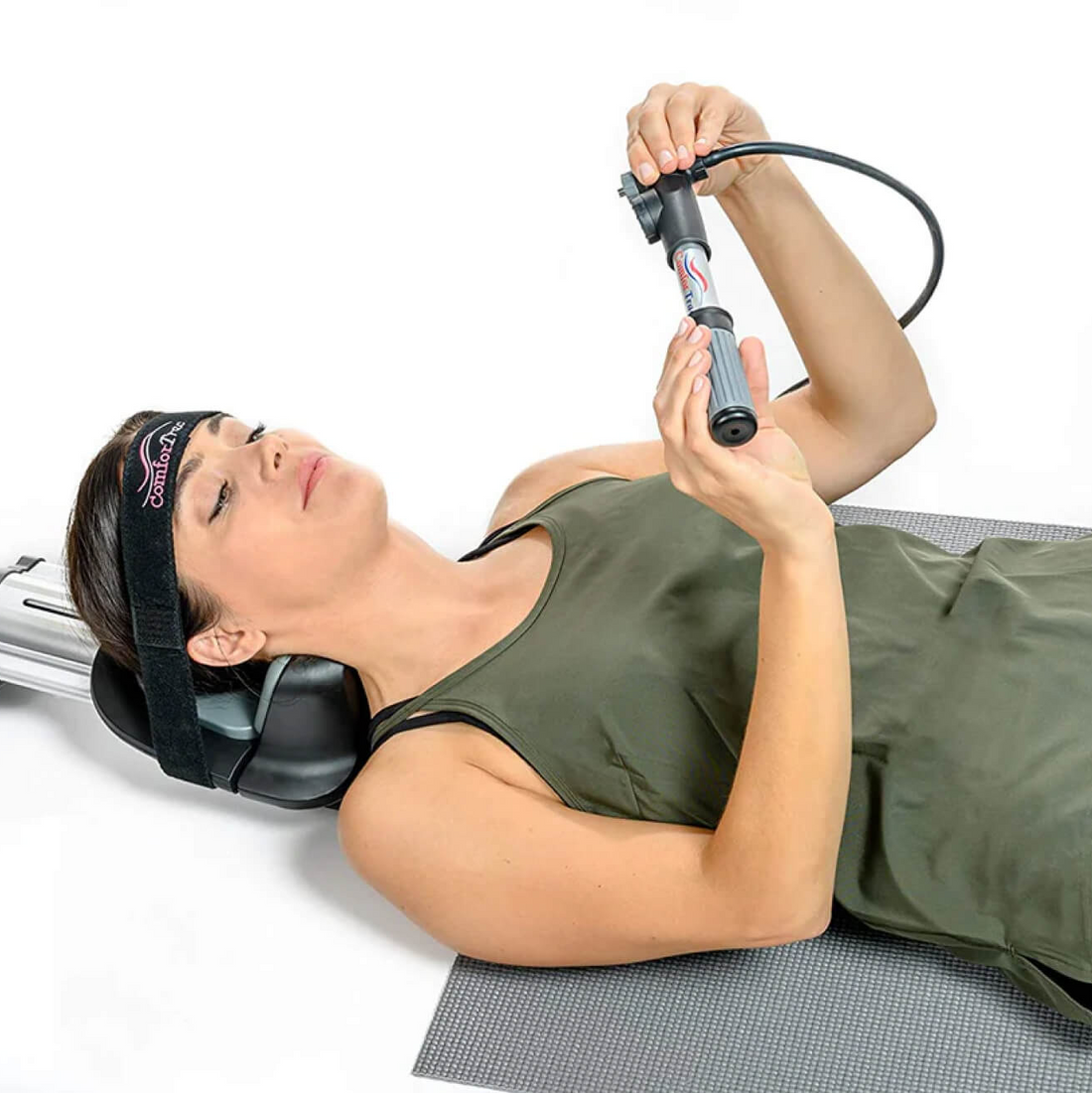
Important: This content is provided for general educational purposes only and is not intended as medical advice, diagnosis, or treatment. Always consult a licensed healthcare professional before beginning cervical traction or any new therapy, and follow all instructions provided by your clinician and the device manufacturer.
Using cervical traction at home may help support neck comfort and reduce pressure when done correctly and under appropriate guidance. A cervical traction device is designed to gently stretch the neck, creating space between vertebrae and promoting a controlled release of tension.
Understanding how to avoid injury with neck traction starts with proper setup, positioning, and conservative force adjustments. This cervical traction device usage guide explains how to use these systems safely and consistently at home. It focuses on practical steps and setup so you can build a consistent routine.
Getting Started With Cervical Traction Device Use
Safe use starts with understanding your readiness and recognizing when to proceed with caution. These cervical traction device safety tips help set the foundation for a controlled experience.
Confirm Readiness Before Starting
You should be able to:
- Follow simple instructions
- Maintain the required position
- Communicate discomfort clearly
If you cannot do these independently, assistance may be needed.
Situations That Require Extra Caution
Before starting neck traction, it’s important to pause if you’ve experienced:
- Recent injury or trauma
- Recent surgery
- Conditions that limit neck movement
These situations do not automatically rule out traction, but they should be reviewed with a provider first.
“Stop Immediately” Warning Signs
During cervical traction, the sensation should feel like a gentle stretch—not strain. Stop and reassess if you notice:
- Dizziness or faintness
- Sharp or worsening pain
- Headaches
- Visual disturbances
- Increased numbness, tingling, or weakness
These symptoms suggest you should stop use and consult a healthcare provider before continuing.
How to Set Up a Cervical Traction Device at Home
A consistent cervical traction setup is essential for safe and repeatable sessions. The goal is to create a stable environment that minimizes adjustments during use. Your home neck traction device should be used in a predictable space. Floor-based systems typically require a firm surface, while door-based systems depend on secure mounting points.
Keep your setup consistent to reduce variability between sessions. These step-by-step cervical traction instructions help create a consistent and repeatable process.
Prepare the Environment
Before starting:
- Clear surrounding clutter
- Ensure adequate lighting
- Keep a timer or phone nearby
Position the device so you do not need to twist or reach during use.
Remove jewelry, loosen clothing, and ensure direct contact at key support points. Thick fabrics can interfere with positioning and should be avoided. Devices like the ComforTrac Deluxe Home Cervical Traction Kit are designed to support consistent alignment when set up properly.
How to Position Your Neck and Body for Cervical Traction at Home
Proper neck traction positioning ensures that force is applied evenly and comfortably.
Before applying tension:
- Keep your head centered
- Relax your shoulders
- Avoid tilting or rotating your neck
This neutral alignment helps maintain consistent traction force during use.
Align the Device Correctly
For supine systems, lie flat with the device supporting your neck as intended. For harness systems, ensure straps are even and symmetrical.
Avoid Common Positioning Errors
Common mistakes include:
- Starting with the head turned
- Allowing shoulders to lift
- Uneven strap placement
These can affect how the stretch is distributed and reduce effectiveness.
How Much Force to Use on a Cervical Traction Device
Understanding how much force to use on a neck traction device is key to safe use.
Start With Minimal Force
Begin with low tension and increase gradually over time. If your provider has given guidance, follow it closely.
General cervical traction guidelines emphasize comfort and gradual progression rather than focusing solely on specific force levels.
Understand Pressure and Settings
Adjusting traction device pressure should be done carefully. Many systems allow small changes to traction force settings, helping you fine-tune the experience.
Recognize Signs of Too Much Force
Too much force may feel like:
- Sharp or escalating pain
- Increased pressure
- Headache onset
The goal is controlled stretching, not discomfort.
Cervical Traction Session Length and Frequency at Home
Session timing plays an important role in consistency and effectiveness. Finding the right balance between duration and frequency helps support comfort while avoiding unnecessary strain.
Start With Short Sessions
When beginning, consider shorter sessions to evaluate tolerance. Many users ask how long to use cervical traction device systems. Starting conservatively helps build confidence.
Shorter sessions allow you to observe how your body responds without overloading the neck. This is especially important during the first few uses, when positioning, pressure, and alignment are still being adjusted.
It can also be helpful to stay aware of subtle changes during the session. If the stretch begins to feel less controlled or your posture shifts, it may be a sign to end the session rather than extend it.
Build Frequency Gradually
Another common question is how often to use neck traction at home. Frequency varies, but sessions should be spaced out to allow your body time to respond.
Rather than increasing both duration and frequency at the same time, it’s often more effective to adjust one variable first. For example, you might keep sessions short while gradually increasing how often you use the device, or maintain frequency while slightly extending session length.
Spacing sessions appropriately can help prevent fatigue. Allowing time between sessions gives you a clearer sense of how your body responds and reduces the likelihood of overuse.
Establish a Routine
Creating a consistent neck traction routine helps track patterns and identify what works best over time. Try using traction at similar times each day, such as in the morning or evening, so your body becomes familiar with the routine. Consistency makes it easier to notice changes in comfort, mobility, or response.
Keeping simple notes, such as how you felt before and after each session, can also help you adjust your routine over time. This approach supports a more structured and predictable experience.
How to End a Cervical Traction Session Safely
Ending your session properly is just as important as how you begin. A controlled transition helps maintain comfort and reduces the chance of sudden discomfort.
Release Tension Gradually
Knowing how to release cervical traction safely helps prevent sudden discomfort. Reduce tension slowly rather than stopping abruptly. A gradual release allows the neck to adjust back to its resting position without a sudden change in pressure. This helps maintain a smoother transition and reduces the likelihood of irritation.
Pause Before Transitioning
Remain in position briefly before sitting up. This allows your body to adjust gradually. During this pause, take a moment to notice how your neck feels. This can help you identify whether the session felt balanced or if adjustments may be needed next time.
Transition Carefully
Follow a simple sequence:
- Release tension
- Rest briefly
- Sit up slowly
- Stand when stable
Moving too quickly after traction can lead to lightheadedness or a temporary loss of balance. Taking your time during each step helps maintain control and stability. After standing, avoid sudden movements or immediate activity. Giving your body a few moments to settle can help maintain the benefits of the session.
Mild soreness may occur, especially when starting a new routine. However, worsening symptoms, sharp discomfort, or changes in sensation should not be ignored and may indicate the need to adjust or pause use.
Cervical Traction Troubleshooting at Home: When to Adjust Settings or Stop
Even with proper setup, adjustments may be needed to maintain comfort and effectiveness. Small issues with alignment, pressure, or timing can affect how traction feels, so it’s important to approach changes methodically rather than making large or immediate adjustments.
Check Positioning First
If traction feels uneven, uncomfortable, or less effective than expected, start by checking alignment before changing any settings. Positioning is one of the most common causes of discomfort, and even minor shifts can change how force is distributed across the neck.
Make sure:
- Your head is centered and not tilted or rotated
- Your shoulders remain relaxed and level
- Straps or supports are evenly secured without twisting
- The device has not shifted after tension was applied
Repositioning the device and resetting your posture often resolves discomfort without needing to adjust pressure. Taking a moment to fully reset, rather than making quick corrections mid-session, can help restore a more balanced and controlled experience.
Adjust One Variable at a Time
If repositioning does not resolve the issue, make small adjustments but only change one factor at a time. This might include pressure, duration, or angle, depending on your device. Changing multiple variables at once can make it difficult to determine what caused improvement or discomfort. For example, if you reduce pressure and shorten the session at the same time, it becomes unclear which adjustment made the difference.
Instead, take a gradual approach:
- Adjust pressure slightly while keeping duration the same
- Or shorten the session while maintaining the same tension
- Observe how your body responds before making additional changes
This step-by-step approach helps create a more predictable and repeatable experience over time.
Know When to Stop
Follow general traction safety guidelines and stop if:
- Symptoms worsen
- Relief is inconsistent or short-lived
- You cannot maintain proper positioning
- The device feels unstable or shifts during use
It’s also important to stop if you notice new or unusual sensations, even if they seem mild at first. Traction should feel controlled and consistent, not unpredictable.
Avoid increasing force to compensate for discomfort. If something feels off, more pressure is rarely the solution. Instead, reassess positioning, reduce intensity, or pause use altogether.
Some individuals begin with manual cervical traction, where controlled pressure is applied by a caregiver or provider. Manual traction, typically performed by a trained provider, may be used in clinical settings before transitioning to equipment when appropriate.
A cervical traction device provides more consistent support and repeatable results compared to manual methods.
Using the right equipment helps ensure consistency and ease of use. Shop Orthopedics offers a variety of traction devices designed for different setups and needs. You can explore our traction category to compare available options or contact our support team for guidance in selecting a device that aligns with your needs and provider recommendations.


